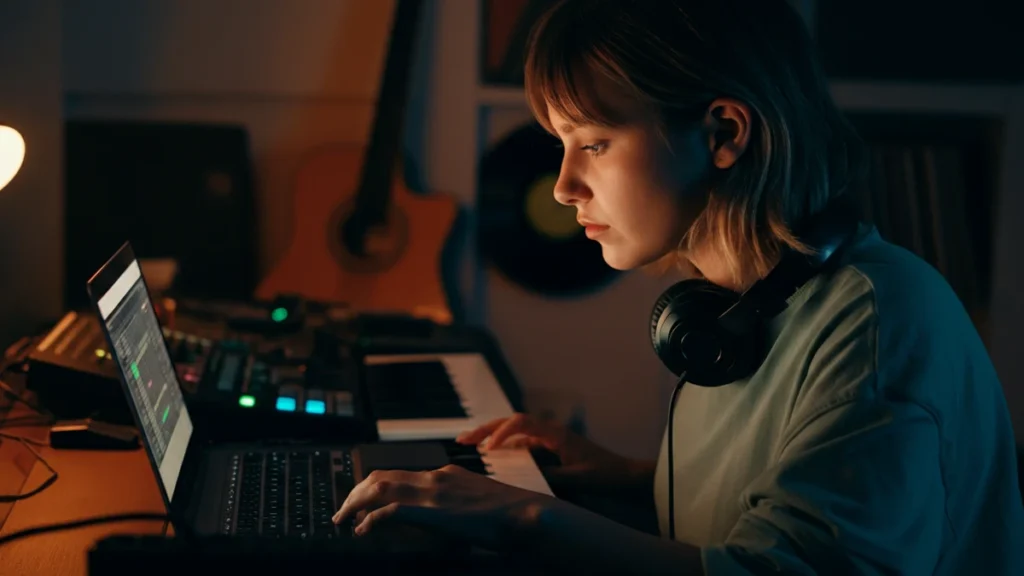
A young female producer in a warmly lit home studio at night, focused on her laptop with headphones on. | PopHits.co
What Will Pop Music Sound and Feel Like in 2026?
The music industry constantly evolves. However, the pace of change feels especially fast as we head into the mid-2020s. Big shifts in technology, fan engagement, and content distribution are reshaping the landscape for artists and labels. So, what will define pop in 2026? Powerful trends, not just one sound or artist, will reshape everything, including songwriting and global tours. Superstars like Taylor Swift keep breaking commercial records. Meanwhile, new artists like Chappell Roan and Sabrina Carpenter forge new paths to mainstream stardom, building success on authenticity and direct fan connection. This article offers a glimpse into pop music’s near future.
The Post-Eras Tour Blueprint: Mega-Tours and Immersive Experiences
We can’t talk about live music’s future without mentioning Taylor Swift’s The Eras Tour. It had a colossal impact. The tour earned record revenue and dominated culture. It also provided a new blueprint for stadium tours. These now offer multi-hour, career-spanning celebrations and serve as communal, global events. By 2026, its influence will likely spread among other A-list artists. They will face pressure to deliver more than just a 90-minute set of hits.
Industry giants like Live Nation and AEG Presents must manage the huge logistical and financial demands of these mega-productions. This might create a split in the touring world. Some artists will manage Eras-style tours. Others will focus on specific, experience-driven residencies or festival headline slots. We will closely watch how stars like Billie Eilish and Olivia Rodrigo plan their next major tours. Will they use the long, chronological format? Or will they innovate with new stories or tech to create unique, immersive worlds? Fans now expect much more. Blockbuster tours now offer a deep, personal journey through an artist’s discography.
The AI Co-Writer: From Controversy to Creative Tool
Talk about AI in music is changing fast. It’s moving from fear of replacement to curiosity about collaboration. In 2024, unauthorized voice cloning and copyright sparked debates. By 2026, AI will empower professional songwriting and production. Major labels, like Universal Music Group, are already partnering with ethical AI music companies. They aim to integrate these technologies into their creative work.
By 2026, generative platforms like Suno AI and Udio will likely be sophisticated tools for musicians. They will move beyond just being fascinating novelties. Their main use in pop will be as “creative accelerants,” not for generating finished songs. For example, a producer might use AI to create a dozen drum patterns in a specific style. A songwriter could hum a melody, and AI could harmonize it in a chosen genre. An artist might also quickly demo a lyrical idea over a full instrumental track. Ethical guidelines will remain a key discussion point. However, AI will focus on being a co-writer and assistant, helping break creative blocks and quickly explore possibilities, not replace human artistry.
The Shifting Sound of the Charts: Authenticity as the New Formula
A polished, often formulaic pop sound defined the 2010s. The 2020s, however, are showing radical authenticity. Artists like Chappell Roan have risen quickly. This shows a strong market demand for unique, unapologetic viewpoints. Her success came from years of building a dedicated fanbase. She used vibrant live shows and a distinct visual identity. This approach serves as a model for pop in 2026. Chart success no longer depends only on huge radio campaigns or key playlists.
Viral smash hits will still exist. Sabrina Carpenter’s “Espresso” proves this. A well-made, repeatable pop song can still dominate global talks. But the key difference is the many paths to the Billboard Hot 100. By 2026, charts will reflect a more fragmented and diverse audience. The idea of one universally agreed-upon “song of the summer” might disappear. Instead, many hit songs will cater to different niches. All will achieve massive scale. Success will mean more than just a high chart position; it will also involve deep fan connection and building a sustainable, long-term career.
Beyond TikTok: The Diversification of Music Discovery
The 2024 dispute between Universal Music Group and TikTok shocked the industry. TikTok temporarily removed a huge music catalog. This forced labels and artists to face their dependence on one algorithm. The two giants eventually agreed. But the industry learned a lesson: diversification is vital for survival.
By 2026, artists will use more sophisticated and varied discovery strategies, including deeper integration into gaming platforms. Fortnite and Roblox, for example, offer huge, engaged audiences for virtual concerts and item drops. Direct-to-fan communication will also grow. Private communities on platforms like Discord and Geneva will become crucial for building and mobilizing core fanbases. Curated playlists on Spotify and Apple Music will still matter, though their influence might lessen as discovery becomes more decentralized. For pop in 2026, the big question is this: will a new social platform challenge TikTok? Or will discovery become a mosaic of many smaller, targeted channels?
The Album in the Streaming Age: An Enduring Statement
For years, experts predicted the album’s death, believing single-track streaming would dominate. Yet, the album format remains. It remains a top artistic statement, though not a commercial necessity. Artists like Taylor Swift and Billie Eilish still use albums. They build narrative worlds, explore complex themes, and define new career eras. For these artists, the album forms the core, with tours, merchandise, and visual content building around it.
However, the term “project” will keep expanding. We will see more deluxe editions, surprise EPs, and “chaptered” releases, which will unfold over weeks or months. This flexible method helps artists maintain momentum. It also keeps them in the cultural conversation longer. Streaming services like Spotify already adapt their interfaces to better showcase these multi-part projects. In 2026, the album won’t be the only way to release music. But it will still be the most powerful way for an artist to make a significant statement.
This new playbook isn’t only for solo artists; entire creative hubs also shape the future. The growing Brisbane indie pop scene is a great example. It has become a hotspot for fresh sounds.
Your Career in Music Starts Here
Pop music’s changing landscape offers both challenges and new opportunities. Independent artists, producers, and label managers need to understand these trends. This knowledge is key to navigating the future. Staying current requires the right tools and insights. The MW3.biz platform serves modern music professionals. It offers powerful analytics, collaboration features, and resources. These help you build your career in this dynamic industry. MW3.biz provides the foundation for success. This is true whether you master viral hooks or plan immersive fan experiences. Explore the platform today and start building music’s future.
About Author