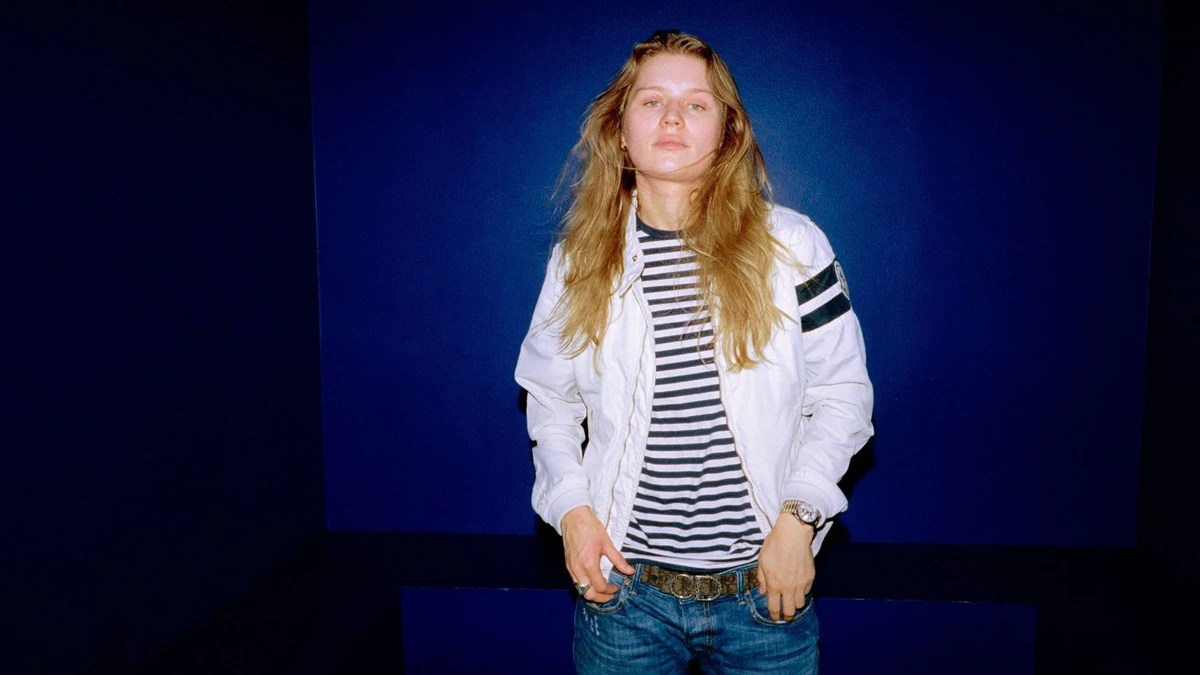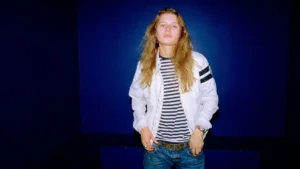


The hook on Pylon is not a riff. It is homesickness. Beabadoobee wrote most of her fourth album between shows and in hotel rooms, as Complex reports, and the ache of being away came out as the loudest, most distorted record of her career. Pylon arrived on Friday 18 September through Dirty Hit and Interscope Records: 14 tracks, a run of big-name guests, and a first headline arena tour starting 13 days later.
The shift is easy to hear if you know where Beatrice Laus started. She was 17 when “Coffee” went viral, as Rolling Stone recalls, and her previous album, This Is How Tomorrow Moves, was a laid-back record made with producer Rick Rubin in 2024. It was also her first UK No. 1 and, Billboard notes, a career-high No. 34 on the Billboard 200. Pylon keeps the melodies and swaps the calm for feedback.
Why a Steel Tower Gave the Album Its Name
The title is literal before it is poetic. Billboard reports that Pylon is named after the steel towers that carry overhead high-voltage power lines, and the press release behind the announcement explained why. Through long stretches of isolation on tour, the pylons she passed became a reminder of the friends and family she had left at home.
NME reads the image neatly: pylons are fixed points on a shifting landscape, carrying power across long distances. Laus has been careful not to oversell it. In a release-day interview with Vogue Australia, cited by Complex, she said she did not want Pylon to feel like a concept album. She had simply become fixated on the towers as an odd link to home.
The idea also shapes the first sound you hear. The opening title track, musicOMH notes, recreates the ambient hum of an electrical pylon before a finger-picked acoustic guitar drifts in, and the crunch of the full band arrives only near the end. It is a statement of intent: quiet on the surface, charged underneath.
The First Four Tracks Set the Volume
“Sun Has Set” follows, and it is the album’s thesis. The lead single arrived on 24 June with the album announcement, built, as Complex describes it, on screamed vocals, riff-heavy guitars and distorted amps. musicOMH calls it one of the best songs Laus has written; Rolling Stone calls it bruising. Its video was directed by Jake Erland, her partner and longtime visual collaborator, according to Billboard.
Laus has framed the song as the kind of thing she wished she had said to someone at the time, a burst of petty, single-minded anger that she finally lets run. NME hears that sentiment running through the whole first half of the record, and musicOMH singles out the chorus, spat out over a cacophony of guitars.
“Estranged” comes next and, for musicOMH, is one of the album’s great alt-pop songs, even if Studio One hears its lyrics drifting into sulky, hanging-out-at-the-mall territory. “Switchblade”, the second single, landed on 14 July. Complex describes it as bass and childlike vocal chants set against a high guitar line and bursts of feedback, while NME hears a song toying with the instinct to fight or flee.
The Middle Stretch Softens, Then Snaps
Track five carries the most personal story on the record. Laus told ELLE UK, as Complex reports, that she wrote “Write Me A Letter” during a hard period with her boyfriend, cinematographer Jake Erland, when the relationship seemed to be heading for the end. Playing him the song changed the conversation, and they stayed together. The production carries Matty Healy and George Daniel of The 1975, with Healy on background vocals, and NME hears it switch from indie-pop into churning pop-punk.
“It’s Alright” is the exhale. Rolling Stone calls it her most openhearted romance, sung over J. Mascis-style guitar, and musicOMH hears it as a throwback to her acoustic days. “In Motion” goes the other way. Studio One places its vocal in L7 and Hole territory: a soft start that gives way to a pummelling chorus, then a piano coda that deliberately stumbles into audio glitches.
Then comes “Memories”, the third single, released on 20 August. Laus calls it the happiest song on the album, according to NME, and it looks back to her teenage years writing alone in her bedroom. Studio One calls it “arguably the most friendly piece of sugar-coated pop on the album”. For a pop listener, this is the one to start with: the topline is bright, and the melancholy sits just under it.
Hayley Williams and Brendan Yates Step Into the Room
The back half is where the guests arrive. Hayley Williams of Paramore is billed as a main artist on “Nothing To Prove” and co-wrote it with Laus, Daniel James and Mike Elizondo, per the Spotify credits Complex compiled. Laus has called Williams a childhood hero. NME hears a song about taking power back from fair-weather friends; musicOMH hears an anthem, with soaring guitars and blissful harmonies.
“Radio” is the kiss-off in plain sight. In Rolling Stone’s reading, she has been burned for the last time and will not bother telling the other person off. She will turn the hurt into a song they end up hearing on the radio instead. musicOMH points to the power chords scattered all over it.
“Powerlines” gives the tour its name. It is a duet with Brendan Yates of Turnstile, their first documented collaboration according to Complex, and Rolling Stone describes two long-distance lovers craving each other across the miles. Studio One calls it an album highlight and one of its favourite duets of the year, a moody track that builds into a crunchy, fuzzed-out jam.
Spark, Despite That and Satellite Close the Record
“Spark” was co-written and co-produced by Evan Stephens Hall of Pinegrove, a band Laus loves enough to carry a Pinegrove tattoo, as Complex notes. NME hears her lean into oblique, darker imagery here, and musicOMH counts it among the understated tracks that tug at the heartstrings.
“Despite That” is a jolt. At around 90 seconds, musicOMH describes it as one part dreamy bedroom pop and two parts distorted, feedback-drenched rock. It is the clearest picture of the whole project in miniature: the old Beabadoobee and the new one in the same song.
Closer “Satellite” features Chino Moreno of Deftones on background vocals. It starts as a lovelorn ballad and becomes, in musicOMH’s words, “a huge, distorted wall of sound”, while Rolling Stone hears a touch of Lilith Fair in it. NME says the album feels deliberately unresolved, and “Satellite” ends it that way.
The Touring Band Behind the Noise
The rough edges are by design. The Spotify credits compiled by Complex list Laus and Jason Vance Harris as producers on all 14 tracks. Harris spent nine months as her touring guitarist, and drummer Luca Caruso, who also has production credits on the record, plays in her touring band. Title Fight guitarist Shane Moran co-wrote seven of the songs, according to those credits.
Laus has explained the sound in terms of what she grew up loving. She told Zane Lowe she had always loved hardcore and Midwest emo and wanted to make her own version, and she has credited rediscovering American Football and Mineral with pointing her there. Rolling Stone also hears Sonic Youth, Helium and Dinosaur Jr in the feedback. She has said, too, that she stopped worrying about sounding perfect once she was playing with a live band.
The critics have mostly followed her there. Rolling Stone calls Pylon an excellent fourth album full of “raw guitar aggression”, NME calls it her “most forceful record yet”, and musicOMH calls it her “most consistent and confident album to date”.
The Powerlines Tour Starts on 1 October
The album now goes straight into the biggest rooms Laus has played. The Powerlines Tour is her first headline arena run. It opens at Mohegan Sun Arena in Uncasville, Connecticut on 1 October and reaches Madison Square Garden in New York on 5 October, according to Billboard and Complex. The UK leg includes Cardiff’s Utilita Arena on 16 November, and the European dates run into December, with Paris on 30 November and Düsseldorf on 7 December the last date on Complex’s list.
Wisp supports much of the North American and UK run, and Violet Grohl joins select European dates, per Complex. For anyone deciding whether to go, the pitch is simple: these are loud, band-first songs written on the road, now heading back out on it.
Pop’s guitar turn is not only happening here. Our look at how Charli XCX followed Brat with guitars instead of the dancefloor traced a similar move from another corner of pop. On Pylon, Beabadoobee makes the case that missing home can sound huge.
About Author