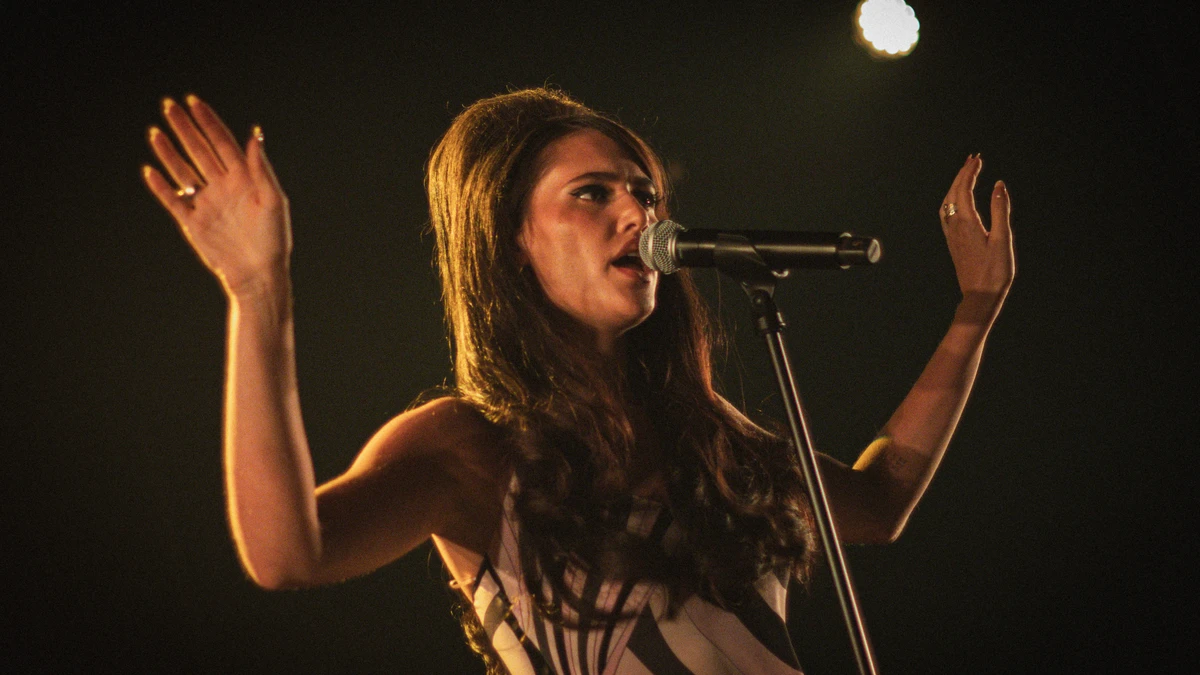

Tate McRae in 2026 has settled into a rhythm most pop stars spend a career chasing: an industry honour on the shelf, a hotly anticipated album taking shape in the studio, and a marquee festival headline on the calendar. The Canadian singer, dancer and songwriter spent the first half of the year turning a breakout into a benchmark, and the back half is set up to push her further still.
Where 2025 was the year Tate McRae proved she could top charts and fill arenas, 2026 is shaping up as the year she consolidates it. Here is where she stands, what is coming, and why the next few months matter for one of pop’s fastest-rising headline acts.
The Numbers Behind a Breakout Year
The momentum is not abstract. Her third studio album, So Close to What, arrived at No. 1 on the Billboard 200 in early 2025 and has since racked up more than three million equivalent album units worldwide. The record turned singles into staples and gave McRae the kind of catalogue depth that lets a live set breathe, with more than one radio hit to anchor it.
Her Morgan Wallen duet “What I Want” delivered her first Hot 100 No. 1, a crossover moment that moved her from pop favourite to chart mainstay and proved she could travel outside her core lane without losing it. That single mattered strategically as much as commercially: it introduced her to a country-leaning audience that does not always overlap with mainstream pop, widening the base she now brings into a festival season.
The streaming picture tells the same story. McRae drew roughly 6.21 billion Spotify streams across 2025, a total that placed her among the platform’s most-played artists of the year and gave her label the kind of data that turns a rising name into a priority. Add the Miss Possessive Tour, her first arena run, which played 81 shows between March and November 2025, and the foundation for a big 2026 was already poured well before the year began.
A Billboard Hitmaker Award Caps the Climb
In April 2026, McRae was named the Hitmaker at Billboard’s Women in Music ceremony, one of the industry’s more closely watched honours. The award recognises commercial impact and songwriting reach rather than a single viral moment, and it landed as validation of a run that stretched across two album cycles and a global tour rather than one lucky release.
Billboard’s Women in Music franchise has become a reliable barometer of who the industry expects to shape the next few years, and slotting McRae into the Hitmaker category read as a bet on longevity. It grouped her with the artists labels build campaigns around, not the ones they hope to catch lightning with once.
Speaking to Billboard around the ceremony, McRae framed the moment as a starting line rather than a finish. “I have a very specific vision for my music and where I want to go creatively,” she said, a comment that read less like acceptance-speech boilerplate and more like a preview of what the next record might sound like.
A Fourth Album Is Quietly Taking Shape
The biggest story for fans is the one still being written. McRae has confirmed she is working on her fourth studio album, informally referred to as TM4, with sessions reportedly under way since early 2026. Nothing has been dated formally, and industry watchers have penciled in a window somewhere between late 2026 and 2027, leaving room for the festival run to double as a soft launch.
Reports have linked the sessions to established pop producers and hinted at a lean toward dance and electronic textures, though none of that is confirmed and McRae has kept specifics close. What is clear is the ambition: after a record that leaned into sleek, radio-ready pop, she has signalled she wants the next one to move somewhere new rather than repeat the formula that worked.
That instinct fits her trajectory. Each McRae album has nudged further from the acoustic balladry of her earliest hits toward rhythm-first, body-moving pop, and a fourth record that commits fully to the dance floor would be an evolution her live show has arguably been pointing at all along.
The Lollapalooza Headline Slot
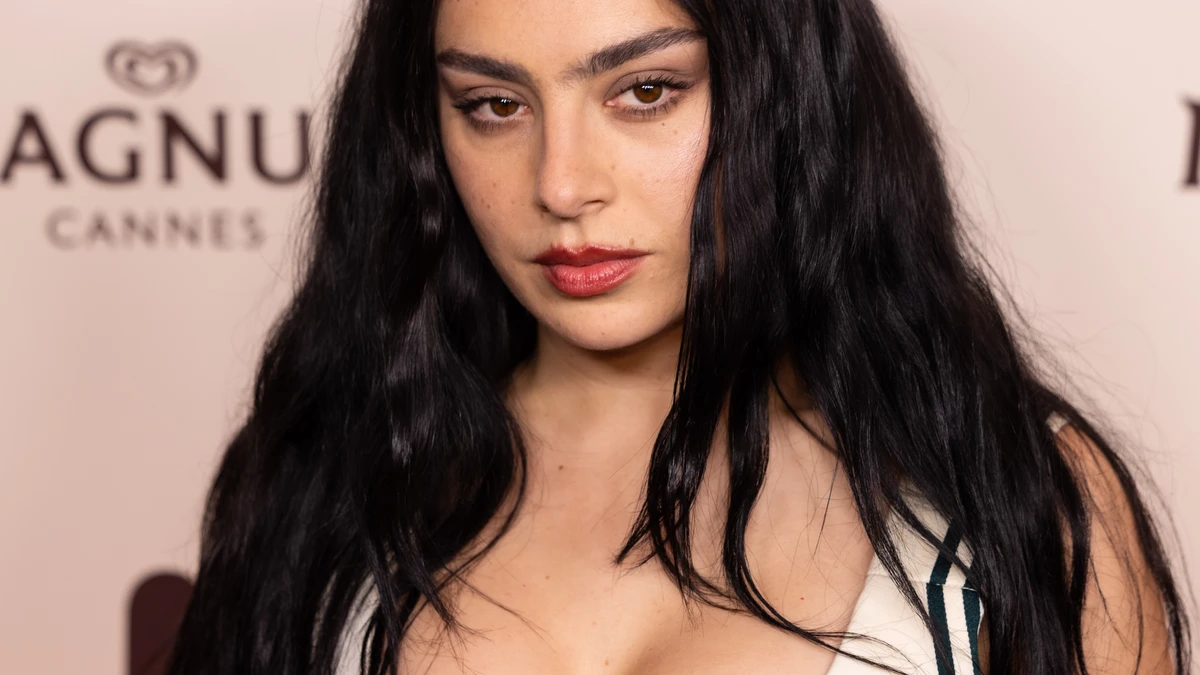
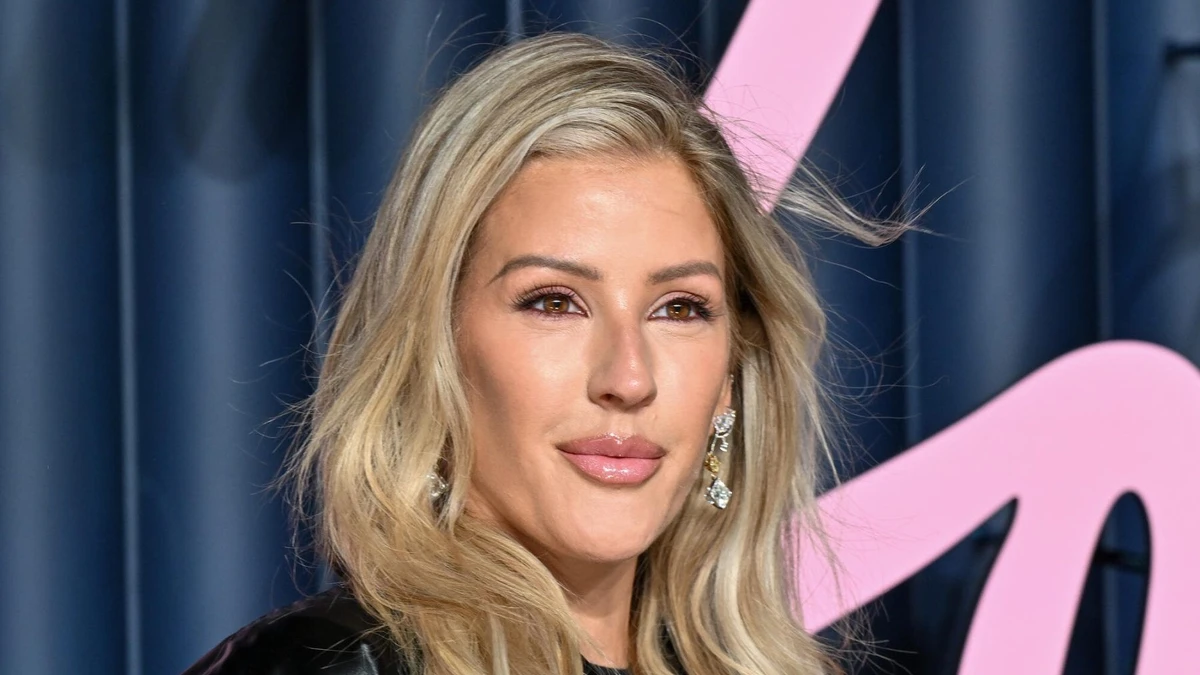
The most visible date on her 2026 calendar is Lollapalooza. The Chicago festival runs July 30 through August 2 in Grant Park, and McRae is billed among its headliners, playing to the kind of flagship US crowd that certifies an artist’s standing. Variety reported her booking alongside a top tier that includes Lorde, Charli XCX and Olivia Dean.
Headlining a festival on Lollapalooza’s scale is a different test from selling out a headline arena tour: the audience is not all there for her, the set has to win over casual passers-by, and the moment plays out on a hundred phone screens by nightfall. A clip that travels can do more for an album rollout than a month of promo, and a flat one lingers just as long.
The Dancer’s Edge Onstage
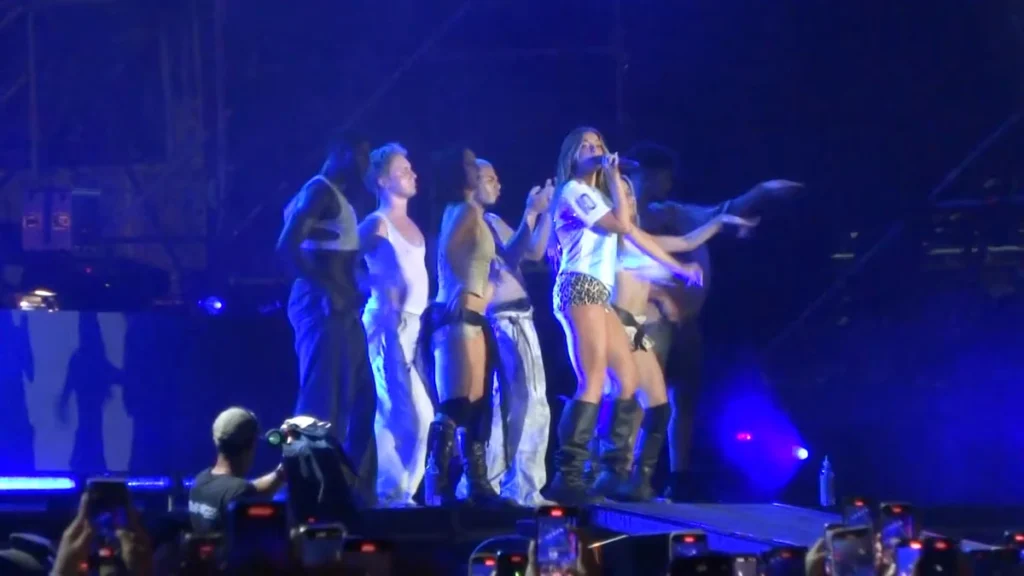
If any of pop’s current headliners is built for that pressure, it is McRae. She trained as a dancer long before she charted, finishing near the top of a televised dance competition as a teenager, and that background shapes a live show that leans on movement as much as vocals. Where many pop sets are essentially the record played loud, hers is choreographed, physical and paced for a big field.
That is precisely the skill a festival headline rewards. The format asks an artist to hold attention across a wide, distracted crowd at dusk, and a show designed around visual spectacle carries further than one built around subtlety. For McRae, Lollapalooza is less a stretch than a showcase of the thing she does that most of her peers cannot match.
A Grammy Nod and Critical Momentum
Awards attention has followed the commercial run. McRae picked up a Grammy nomination for Best Dance Pop Recording for “Just Keep Watching,” a nod that matters beyond the trophy because it signals critical and peer recognition in a lane, dance-pop, that she has increasingly made her own. Nominations in that category tend to precede the moment an artist is taken seriously as a craftsperson rather than just a chart presence.
That recognition is part of why the fourth album carries weight. An artist with chart numbers, a touring base and awards traction is in a rare position to take a creative swing without risking the audience, and McRae’s own comments suggest she intends to use it rather than bank the goodwill.
Where Tate McRae’s 2026 Goes From Here
The pieces line up neatly: a festival summer that keeps her in front of new listeners, an album cycle building behind the scenes, and enough industry goodwill to launch it loudly. If TM4 lands in the back half of the year, the Lollapalooza set becomes a bridge rather than a peak, a way of keeping the audience warm for whatever comes next.
It also fits a broader question the genre is asking itself about what pop music will sound and feel like in 2026, and McRae, poised between chart-pop polish and a rumoured electronic turn, is one of the artists most likely to help answer it. For now, the story of Tate McRae in 2026 is one of an artist with the wind fully at her back, choosing where to point it.
About Author