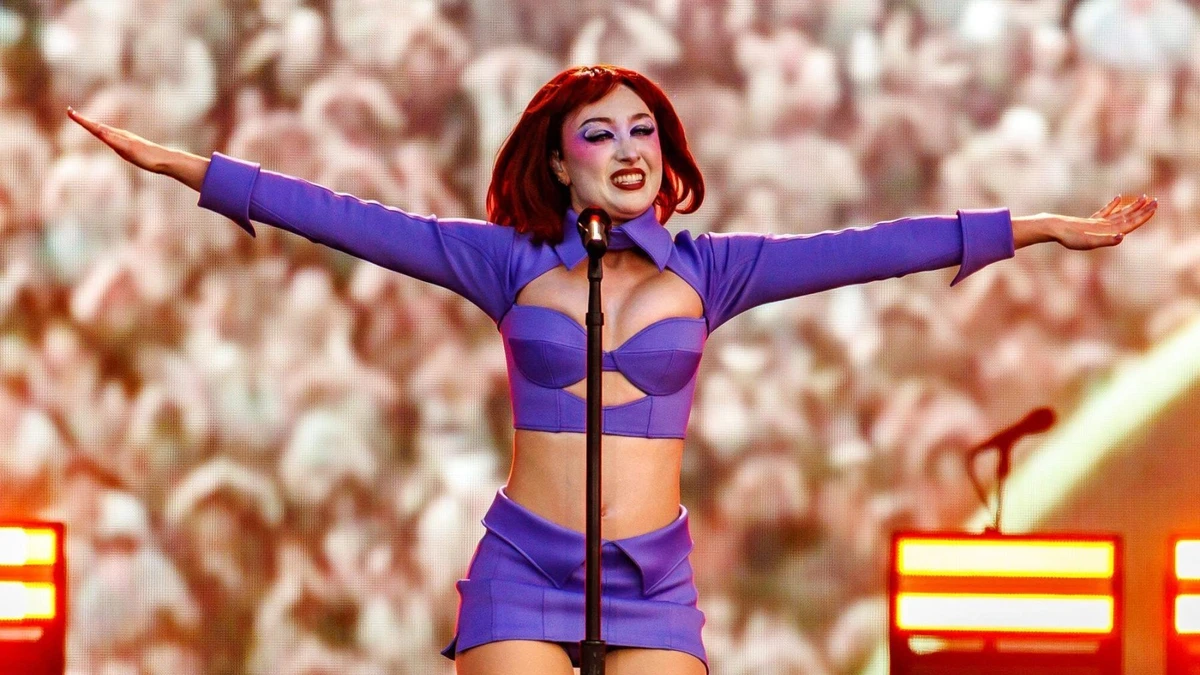


The cheapest seat on this tour costs twenty dollars and you do not find out where it is until you turn up. That is the deal Charli XCX built into the Music, Fashion, Film run, which opens on Friday 11 September at the Xfinity Mobile Arena in Philadelphia.
It is a small detail with a large point behind it. Arena pricing has spent five years drifting upward, and the standard response from a headline act is a vague statement about accessibility. This is a mechanism instead of a statement, and it is worth reading properly before the first show.
What an Angel Ticket Actually Is
The scheme was announced alongside the tour. A limited number of tickets priced at $20 are released separately from the general on-sale, and, per NME’s report on the announcement, they may sit anywhere from limited view to lower and upper levels to the general admission floor. They must be bought in pairs, with a maximum of two per order.
The location is the interesting part. Buyers collect at the venue box office on the day of the show and find out then where they are sitting. DIY reported the same terms when the dates went up, describing a limited run of $20 pairs with the seat revealed at collection.
Withholding the seat number is what makes the price possible. A cheap ticket with a known bad view is a cheap ticket; a cheap ticket that might land on the floor is a different product, and it stops the tier being read as the back of the room. It also makes the inventory harder to flip, because a reseller cannot advertise what they cannot describe.
The First Five Rows Are Doing Something Else
Separately, a limited number of charity tickets are made available in the first five rows of every venue. Fifty per cent of the net proceeds from those seats go to the Transgender Law Center.
Front-row inventory is the highest-margin stock in an arena and the block most often held back for platinum pricing. Redirecting half the net proceeds from it is a real cost, not a gesture, and it sits at the opposite end of the same building from the $20 tier. One end of the price curve is being cut to widen access; the other is being taxed to fund something.
Read together, the two schemes are a position on what an arena show is for. Neither is unprecedented on its own. Running both on the same tour, in the same rooms, is unusual.
Where the Tour Actually Goes
The run is short by arena standards and heavily weighted toward the coasts. After Philadelphia on 11 September come two nights at the Barclays Center in Brooklyn on the 14th and 15th, then Scotiabank Arena in Toronto on the 21st, TD Garden in Boston on the 24th and Capital One Arena in Washington on the 28th.
October opens with a festival slot at Austin City Limits on the 2nd, then State Farm Arena in Atlanta on the 6th and a second Austin City Limits appearance on the 9th. The West Coast leg runs through Viejas Arena in San Diego on the 14th, back-to-back nights at the Kia Forum in Los Angeles on the 17th and 18th, Desert Diamond Arena in Glendale on the 21st and the MGM Grand Garden Arena in Las Vegas on the 23rd.
Support across the North American dates comes from underscores. The summer that preceded it was festival-shaped: Lollapalooza in Chicago on 31 July, Outside Lands in San Francisco on 7 August, and a double bill-topping turn at Reading on 28 August and Leeds on 29 August.
Two Nights in Two Cities Is the Demand Signal
Read the itinerary as a demand map and it says something the ticket prices do not. Of the arena dates, only two cities got a second night: Brooklyn on 14 and 15 September, and Los Angeles on 17 and 18 October. Everywhere else is a single show.
That pattern is how a promoter hedges. A second night is added when the first is confident, and it is added in the two markets where an act’s audience is deepest and the venue economics are most forgiving. Brooklyn and Los Angeles carrying doubles while Boston, Toronto, Washington, Atlanta, San Diego, Glendale and Las Vegas carry singles is a routing built for a strong but not universal draw, which is what a first arena cycle usually looks like.
The Austin arrangement is the other tell. Rather than an arena date in Texas, the run takes two Austin City Limits slots on 2 and 9 October, the festival’s two weekends. A festival booking transfers the risk to the promoter and guarantees the audience, and slotting both weekends around the Atlanta arena date on the 6th turns what would have been dead time into paid work. It is efficient routing rather than a statement about the market.
There is also the lead time. The dates were announced on 8 June for a run opening on 11 September, which is three months, and the Angel Tickets were held back to August. A three-month runway lets an act watch the general on-sale settle before deciding how much cheap inventory to release, and releasing the $20 tier late is consistent with that. The scheme reads as generous. It is also, in sequencing terms, a way of filling whatever is left.
The Record the Tour Is Carrying
Music, Fashion, Film arrived on 24 July, previewed by the singles “Rock Music” and “SS26”. Its cover is a black-and-white photograph of the musician and composer John Cale, the designer Marc Jacobs and the director Martin Scorsese, which is a fair summary of the album’s title and an unusually literal one.
The Hollywood Reporter described the release as her first album since Brat took over 2024. That is the weight the tour is carrying: not a debut arena run, but the first one after a record that changed the size of the rooms.
The set list question is the obvious one. A tour named after the new album will lean on it, but the two-year-old record is the reason half the building bought tickets, and every headline act on a post-breakout cycle has to choose how much of that to serve.
Why the Pricing Matters More Than the Setlist
Tickets went on general sale on Friday 12 June at 1pm local time, with pre-sale access from the Wednesday. That is a conventional structure, and by itself it produces the usual outcome: the cheapest available seat is not cheap, and the front rows are priced for the resale market rather than the fan.
The Angel and charity tiers are bolted onto that structure rather than replacing it. Nobody should read them as a reform of arena pricing. What they do is carve two deliberate exceptions out of it, one at each end, and make both visible enough that the audience can see the choice being made.
Whether the mechanism holds is a question the tour will answer over six weeks. A $20 pair released in August, collected on the day, is easy to promise and awkward to administer: box offices have to hold inventory, staff have to explain it, and a limited-view seat handed over an hour before doors is a customer-service problem as much as a pricing one. It is worth watching whether the tier survives to Las Vegas in the same shape it left Philadelphia.
What to Watch From Friday
Three things. First, how much of the new record makes the set on opening night, because that decision usually sets the shape of the whole run. Second, whether the Angel Tickets appear again for later dates or turn out to have been a one-release scheme. Third, whether other acts on the autumn arena calendar copy the front-row charity split, which is the easier of the two ideas to adopt and the harder one to argue against.
Pop tours have been getting more expensive and less legible for years, and most of the interesting news about them is now commercial rather than musical. This one has a hook in both columns, which is rarer than it should be. For a different kind of pop story from the same season, see how Ellie Goulding built I Know Too Much on the freedom of not knowing.
The Music, Fashion, Film tour opens in Philadelphia on 11 September and closes in Las Vegas on 23 October.
About Author