
The most-watched question in pop this summer was what Charli XCX would do after Brat. The answer landed on 24 July: Music, Fashion, Film, an eleven-track album on Atlantic whose lead single opens with a croaking guitar rather than a club kick.
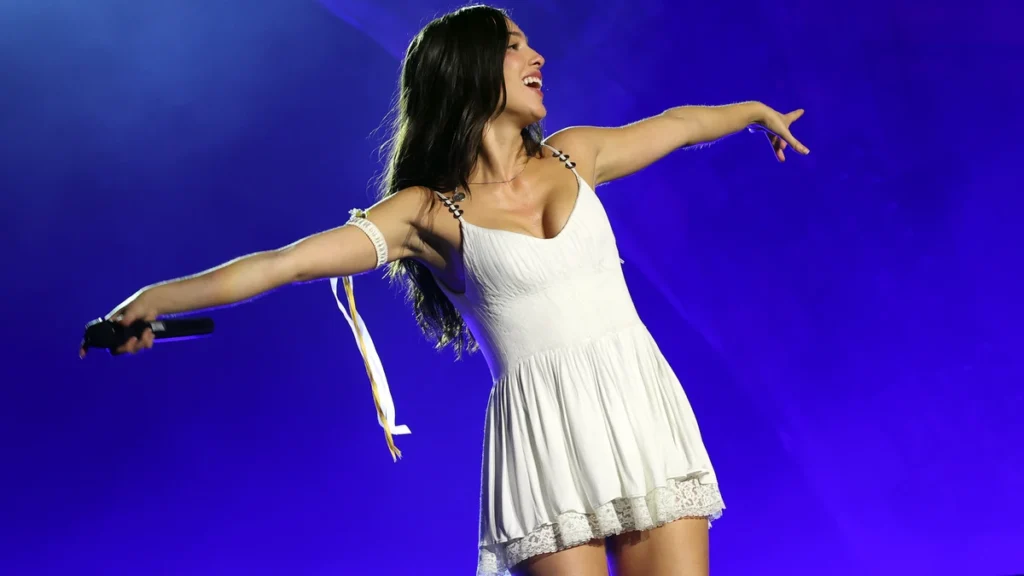
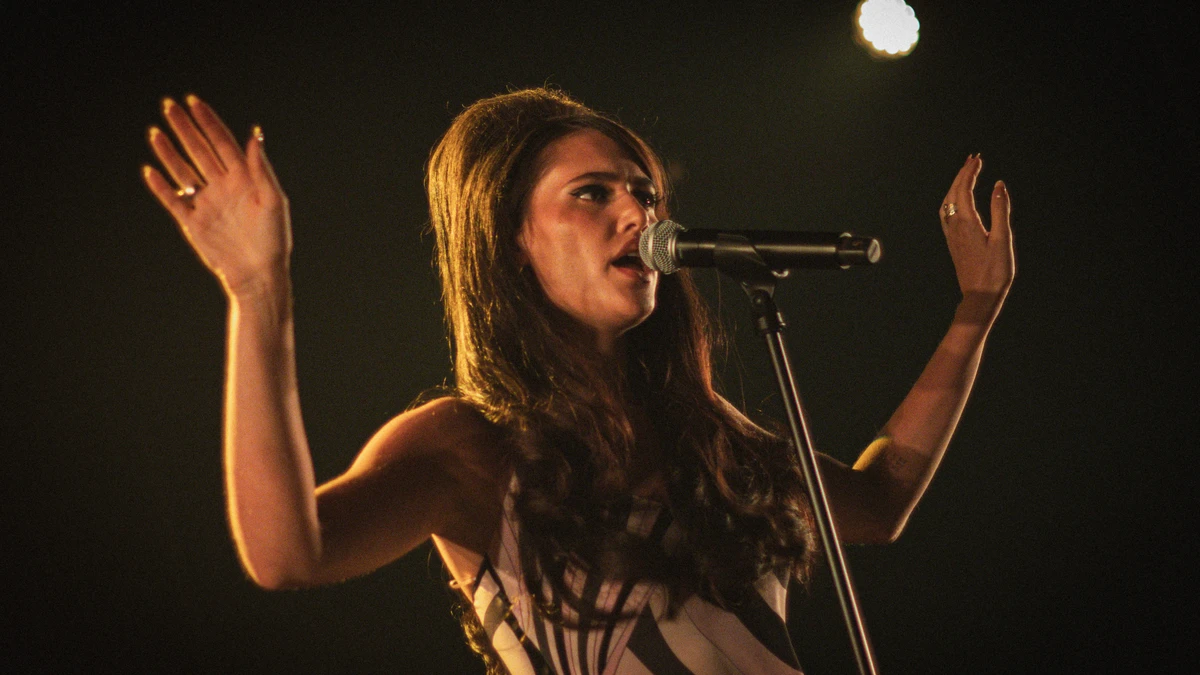
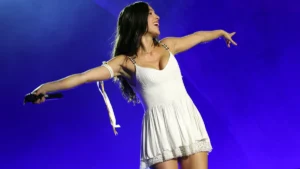
Six days later the songs stopped being a studio object. On Wednesday night Charli XCX played a Spotify event at the Basement East in Nashville and gave five of them their first-ever live airing, with a full band behind her.
What Replaced the Brat Dancefloor
The distance from the last record is deliberate and audible. In its review, Rolling Stone called the lead single “Rock Music” a track of “croaking guitar, cymbal smashes, and stuttering vocals” that “sounds nothing like Brat‘s gleaming, clubby gems” – and nothing like the bouncy pop-punk of her 2014 album Sucker either.
The magazine’s read is that the shift is not really a genre move at all. “It doesn’t define an aesthetic as much as an ethos: hanging around and making stuff with your friends,” wrote Caryn Ganz, describing the record as a look at the machinery of fame built across ten succinct songs and one sprawling closer.
That framing matters, because the eleven tracks were written and produced with the same two collaborators as before, A.G. Cook and Finn Keane. What changed is the instrumentation and the temperature, not the personnel.
Rolling Stone also set out how much the stakes changed in between. For more than a decade Charli XCX was, in the magazine’s words, your favourite artist’s favourite artist rather than a pop star who filled arenas and covered magazines. The 2024 record moved her name from also-starring to above the title, which is why the follow-up was watched this closely in the first place.
The Album She Says Is Not a Rock Album
The rock-pivot narrative got ahead of the artist. After she read some of the “Rock Music” lyrics to British Vogue earlier this year, speculation ran that a heavier record was coming. Charli later clarified she had “never said” she was making a rock album, though she had been open about moving away from the sound of Brat, NME reported.
The finished album supports the smaller claim rather than the bigger one. Later single “Camera” is a restrained, mid-tempo piece of guitar-led electronic pop, hazier and more personal than the club material it replaced. “SS26”, the second single and second track, was described by Our Culture as nihilism painted in beautiful colours over a melodic bassline, and third track “Card Declined” as reaching for the dry, detuned coolness of late-career Kim Gordon.
None of that is a rock record in the way the pre-release chatter implied. It is a pop record that stopped pointing at the dancefloor.
Cronenberg, Cassel and a Record About Being Watched
The album’s collaborators come from film as much as music. The longest track, the roughly six-minute closer “No One Lasts Forever”, is a collaboration with director David Cronenberg. The sleeve, shot by Aidan Zamiri, poses John Cale, Marc Jacobs and Martin Scorsese together.
The “Camera” video, also directed by Zamiri, casts Vincent Cassel as an actor coming apart on a film set while Charli directs from behind a large studio camera – and lets him reprise the finger-gun gesture from La Haine. Her lyric on that track turns the lens around, questioning out loud whether pursuing screen work in her mid-thirties is a good idea at all.
Read together, the guest list and the title are the same joke told twice. This is an album about the apparatus of being famous, made with people who build that apparatus for a living.
Twenty-Five Cinemas Before a Single Streaming Day
The rollout was unusually physical for a major-label pop release. Two weeks before release, the album was played in full at listening parties in independent cinemas across 25 cities, running from 9 to 11 July and taking in the UK, North America, Europe, Australia, New Zealand, Brazil and Japan. The UK venues included the Castle Cinema in London and the Savoy Cinema in Stockport.
Cinemas, not clubs. For a record whose title puts film on equal footing with music, booking the premiere into screening rooms is a coherent choice rather than a gimmick, and it gave the album a fixed moment of collective attention before the streaming numbers started.
The B-Sides She Swore Would Never Stream
The most Charli XCX detail of the campaign arrived after release. Three tracks first shared with fans through her @b.sides Instagram account – “I Keep On Thinking Bout You Every Single Day and Night”, “Playboy Bunny” and “If You Take the Music Then What Has She Got?” – went up on iTunes on 26 July as a digital deluxe edition.
They had existed only on limited-edition 7-inch singles for “Rock Music”, “SS26” and “Camera” and in a physical box set. She had told fans they were “never gonna go on streaming … I don’t think”. Announcing the reversal, she wrote: “You can call me a hypocrite, i don’t mind.”
Her own explanation of why they existed is the clearest statement of the album’s logic anyone has offered: “I made b sides for each of the songs released ahead of Music, Fashion, Film because it felt natural to pair each songs with a fitting counterpart – something that’s adjacent to the album but not entirely part of it.” Our Culture, which rated the album four out of five, noted she also put out a short film about the songs’ evolution that runs longer than the original album.
How the Songs Held Up in a 200-Capacity Room
Which brings it back to Nashville. The Basement East set leaned heavily on the new record and delivered five live debuts: “Yeah”, “Magic Metal Montana”, “Card Declined”, “2007” and “No One Lasts Forever”. Some other new songs had already surfaced at a one-off Brooklyn show earlier in the month. Cronenberg did not turn up for his spoken-word part.
The set did not hide the new material behind the hits either. New songs sat directly alongside “Apple”, “party 4 u”, “anthems” and “pink diamond”, and the night closed on “Rock Music” – the single that started the whole guitar conversation. Placing untested songs in that company is a confident piece of programming for a first proper run-through.
The verdict from the room was positive. “Charli is so fond of vocal filters and studio tricks that it can be easy to overlook how good her songs are under all of that,” wrote Stereogum’s Tom Breihan. “Given this relatively minimal presentation, those songs shone through.”
That test matters more than usual here. Stereogum framed the album as an intentional step back from the anthemic force of the Brat era, and the new tracks as inward-looking and idiosyncratic – which is a harder brief when the next stops are a Lollapalooza headline slot and an arena tour with Underscores. Inward-looking songs still have to reach the back of a room holding twenty thousand people.
The wider pop field is running the same experiment from different directions this year, as our look at Tate McRae’s album-and-festival run traced. What separates this one is that Charli XCX built the retreat into the record on purpose, then booked the biggest rooms of her career to play it in.
This article was AI-assisted and edited for accuracy.
About Author