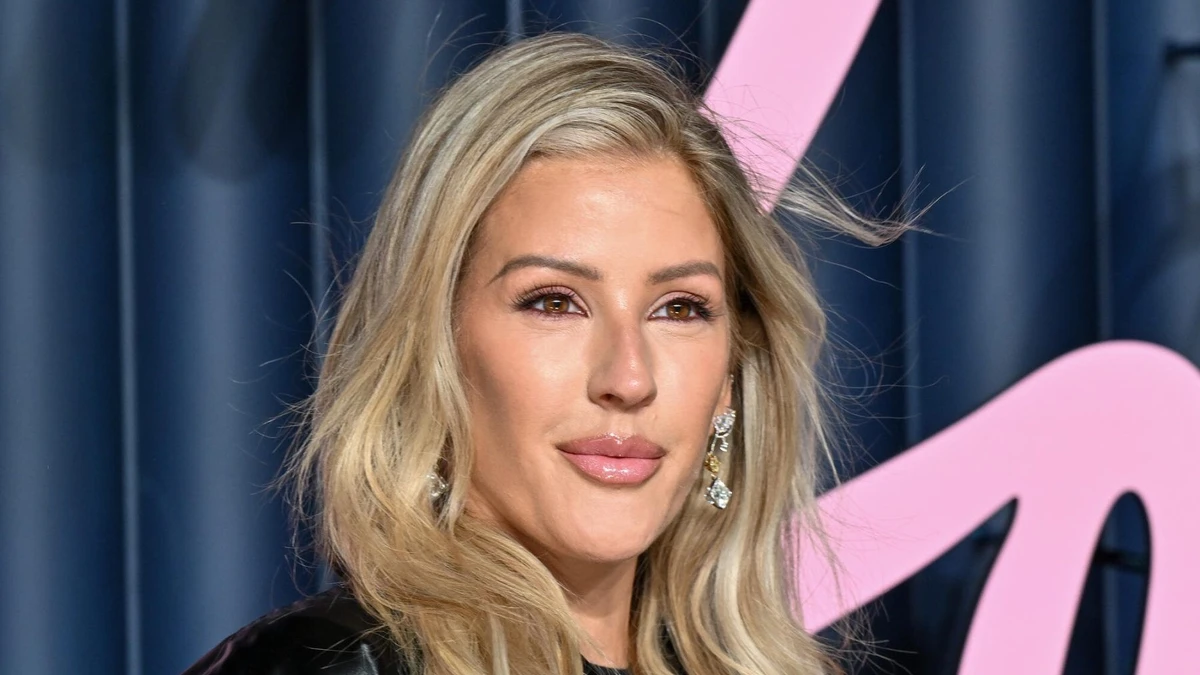

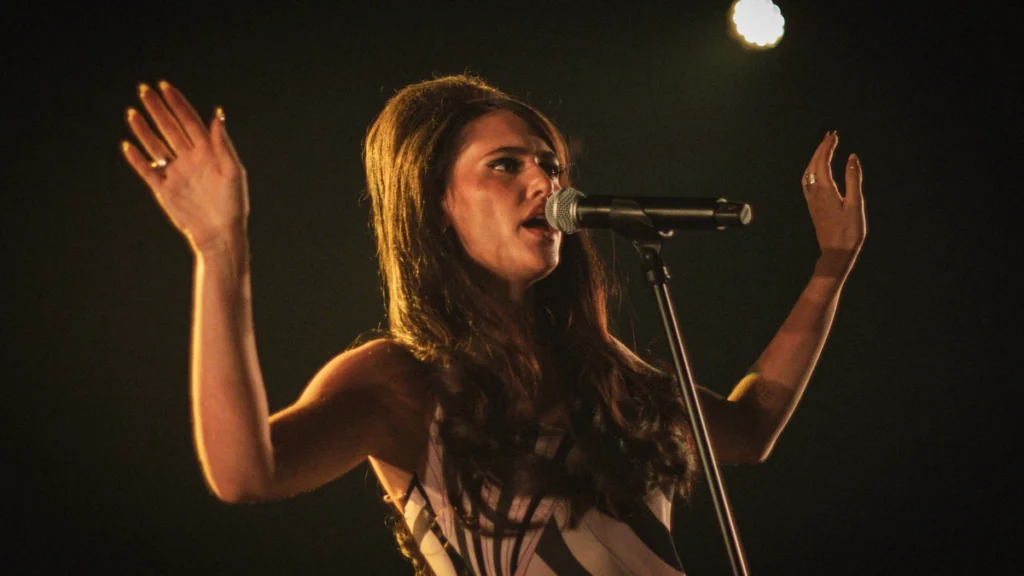
Sienna Spiro performing at the 2026 Montreux Jazz Festival
Sienna Spiro performing at the 2026 Montreux Jazz Festival
The received wisdom about a streaming hit is that it arrives fast or not at all. A song lands, the algorithm picks it up inside a fortnight, and if it has not moved by the end of the first month it is filed away as a near miss.
Sienna Spiro’s Die on This Hill did not read that memo. Released in the autumn of 2025, it took four months to crack the top 20 of the Billboard Hot 100, a climb long enough that most release campaigns would have been wound down before it happened.
Four Months Is a Very Long Time in Pop
Four months of sustained growth is the opposite of how the current machinery is built. Marketing budgets are concentrated in the first weeks, playlist adds are strongest at release, and attention moves on.
The chart record shows the shape of that slow climb. Ones To Watch, writing before the album arrived, listed the song at number 54 on the Hot 100 and number 9 in the UK, and put it past 500 million Spotify streams. Nylon reported that it had reached the Hot 100’s top 20 four months after release.
Those two snapshots are not in conflict. They are the same song at different points on the same curve, and the gap between them is the story. A record that peaks in week two is usually a marketing achievement. A record that is still gaining four months later is being pushed by listeners.
The Bridge Did the Work
What TikTok latched onto was not the chorus. It was the bridge, and one line in particular: “I know nothing could matter! God, I wish something mattered!”
That detail matters more than it looks. A hook engineered for the first eight seconds is a deliberate construction, and audiences have become good at recognising one. A bridge is the least strategic part of a pop song: it arrives two thirds of the way in, it is where writers put the thing they could not fit anywhere else, and nobody builds a campaign around it.
When the bridge is the part that travels, the song was not assembled to be clipped. It was written, and the clip came afterwards. That is an entirely different relationship with an audience, and it tends to produce a longer tail.
Ten Years From a Bedroom to Capitol
The overnight framing collapses on contact with the timeline. Sienna Spiro is twenty. She wrote her first song at ten, called Lady in the Mirror, about being bullied. She told Nylon that singing was never something she remembered starting: it was just something she always did.
She later dropped out of the East London Arts & Music school and began posting covers on TikTok as a teenager, hoping to be discovered. The first real moment came in 2022 with a cover of Finneas’ Break My Heart Again, and her account of it is funnier and more honest than the usual origin story. “I thought I was Beyonce,” she said. “I walked around London like, ‘Oh, I wonder if I’m going to get recognized.’ I had 200K views!”
Two hundred thousand views is not a career. It is the point at which a teenager first discovers the gap between visibility and a living, and most people stop there. She kept going for another three years.
Ten Tracks About Being Temporary
The debut album, Visitor, arrived on 3 July through Capitol Records, executive produced by Omer Fedi. It runs to ten tracks and was preceded by a debut EP, SWIM NOW, SINK LATER, in February.
The record’s organising idea is impermanence, the notion, as she put it, that we are all just visitors in each other’s lives. That is a more difficult premise than a debut usually attempts, because it resists the standard arc of a first album, which is generally a young artist announcing an arrival.
She has been candid that it nearly did not exist in this form. “I didn’t really believe in myself enough yet to have an album,” she told Nylon, describing a project she had not originally planned as one. Coming from someone who had already passed half a billion streams on a single song, that is a useful corrective to the idea that chart data and confidence move together.
A Twenty-Year-Old Drawing a Line on AI
The most quotable thing she said has nothing to do with the charts. Asked about artificial intelligence in music, her answer left no room: “I’ll always strive to make music with real humans that are playing real instruments, rather than using a computer. And never AI.”
Coming from a major-label artist at the start of a career, that is a commitment with a cost attached. It is also consistent with everything else about how she works: a bridge that travelled because it was written rather than engineered, an album about impermanence rather than arrival, and a habit of keeping physical souvenirs from shows.
The position is easy to state and harder to hold across a decade of deadlines. But it is a clearer stance than most established artists have been willing to take publicly, and she took it at twenty.
Forty Dates and What They Are Testing
The My House world tour runs to 40 dates through early 2027, and its shape tells you what the team believes it has.
The summer ran through festivals: Lollapalooza in Chicago on 1 August, Outside Lands in San Francisco on the 8th, London’s Victoria Park on the 22nd. Autumn moves to headline rooms: All Things Go in Forest Hills on 26 September, Austin City Limits on 10 October, then a North American leg opening at the Ryman Auditorium in Nashville on 13 October, through the Hammerstein Ballroom and Brooklyn Paramount in New York on 20 and 21 October, and closing at The Wiltern in Los Angeles on 10 November. January 2027 brings Australia and New Zealand, where Festival Hall in Melbourne, the Hordern Pavilion in Sydney and Auckland Town Hall have already sold out.
Sold-out rooms on the other side of the world, booked for a debut album, are the number that actually matters here. Streaming counts can be built by a playlist; a ticket in Auckland for an artist whose first album is a few months old cannot.
What the Slow Climb Is Worth
The reason to watch this trajectory rather than a faster one is that the two decay differently. A song that peaks in a fortnight tends to disappear at a similar speed, because the audience never chose it so much as encountered it. A song that takes four months to reach the top 20 has been chosen repeatedly, by enough people, for long enough that the chart eventually had to acknowledge it.
That pattern shows up elsewhere in this year’s breakthroughs. It is the same dynamic that lets a quiet record find its audience by degrees rather than by launch, as when Esha Alto landed the hook on Mar Aberto without raising her voice.
Sienna Spiro now has a BRIT Critics’ Choice nomination, a debut album, a sold-out first pass through three countries and a stated position on AI that will be quoted back to her for years. The useful question is not whether the second album charts faster. It is whether it holds as long.
About Author