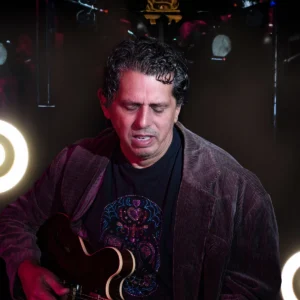


2026 Only This Song Is Pam Messer's Cleanest Chorus Yet
A Newton Abbot Artist Turns a Home Production Into a Cinematic Waltz-Time Crossover Ballad
The chorus of 2026 Only This Song moves in 6/8, a waltz time that lets Pam Messer‘s voice ride on rising strings. Released on 10 January 2026, the single is a pop and classical crossover ballad from an artist based in Newton Abbot, England. It is also the clearest evidence yet of how far her home productions can travel.
Pam Messer’s 2026 Only This Song is in the playlist below, and Pam Messer’s artist profile gathers the rest of the coverage. The ballad came to this desk through PopHits.Co Music Charts, which verifies independent artists and places their releases across its network of music news desks. Have a listen, then read on for how a Devon home recording grew into a full orchestral arrangement.


How 2026 Only This Song Puts Pam Messer Inside the Wave of Home-Produced Crossover Pop
In fact, the wave here is a working method as much as a sound. More independent artists now start records alone and finish them with collaborators they may never meet in person. Messer is a clear example. To begin with, she built the first version of this song herself, and the original production dates back to May 2025.
The finished track took shape across the Atlantic. Producers Mike Mangini and Skip Glogan rebuilt her instrumental into a full cinematic orchestral arrangement, working remotely through a New York artist development network. That network, led by Melissa Mulligan, teaches artists how to produce their own music. In other words, the help aimed to make Messer a stronger self-producer, not to replace her.
Meanwhile, the vocal stayed close to home. She recorded it in her own garage in Devon, then sent it overseas to sit inside the new arrangement. Two reviewers described the same trick she used to raise the performance: she sang the lyric as if it were another artist’s song. That small change of perspective gave her room to deliver the chorus with real scale.
The result sits in classical crossover territory, with the dynamics of a pop ballad. Pulse Hutch heard space, restraint and strings that rise and fall with careful pacing. The same review called it her most assured vocal performance to date, with clarity and control in her tone. That is the case for calling this her cleanest chorus so far.

The Lyric Looks at Love, Timing and Starting Again Later in Life
The song is honest about where it comes from. Messer has explained that it reflects her own experience of being single in her fifties and finding that new love is not easy to come by. KIMU described it as reflective and relatable, and Pulse Hutch noted that it avoids forced drama in favour of quiet acceptance.
The waltz time is part of that story. Powher Sound reported that Messer took inspiration from her parents, who met through dance classes, and from period dramas that show romance on the dance floor. So the 6/8 rhythm is more than a stylistic choice. It ties a song about finding love late to an image of how love used to be found.
Similarly, her wider work points the same way. The official site describes reflective songwriting about love, heartbreak, resilience and vulnerability. It also notes that she often writes music and paints at the same time, which helps explain the visual, widescreen quality of the arrangement.

Whitney Houston, Barbra Streisand and Film Soundtracks Are the Closest Neighbours to Pam Messer’s Song
Messer names her own models. Both KIMU and Powher Sound reported that she drew on Whitney Houston and Barbra Streisand for this single. Those references explain the ambition of the vocal. Houston and Streisand built careers on ballads where a single voice carries a large arrangement without being swallowed by it.
Even so, the comparison does not make the song an imitation. Pulse Hutch was careful to say that the influence is audible but that the voice stays personal and grounded. That balance matters for a crossover record, where an orchestra can easily overpower a singer.
Beyond that, the other neighbour is the film soundtrack. KIMU went as far as picturing the song in films about love later in life, the kind of story told in Something’s Gotta Give or It’s Complicated. That is a fair read of the arrangement, which is built for scenes rather than background play.
The single found a wide early audience among independent music writers, too. LOCK, Illustrate Magazine, Flex Music Blog, Swiispa, Indie Dock Music Blog and Minds Behind the Music all covered it in its first weeks.
For listeners, the audience is clear. This is for people who grew up on big vocal ballads and want one written from an adult perspective. It also suits anyone who likes their pop with strings and space rather than electronic drops.
The PopHits.News curator team put it this way:
“2026 Only This Song proves that a home production can grow into something cinematic without losing its author. The 6/8 lilt gives the chorus a natural sway, and Pam Messer sings it with the confidence of someone who finally sounds at home in her own arrangement.”
Where to Hear 2026 Only This Song and Follow Pam Messer
Stream 2026 Only This Song on Spotify or Apple Music, or find it on the official site. Follow Pam Messer across platforms: Spotify, Apple Music, Deezer, Pandora, YouTube, Instagram, Facebook and X.






















About Author